

You ask three mechanics how much it will cost to service your car.
One says €135.
Another says €195.
The third says €275.
All three call it a “car service”.
So is the €135 service suspiciously cheap? Is the €275 one twice as good? Or are you actually being offered three different things?
In most cases, that last question is the useful one.
I service cars every week around Limerick, and one of the most common messages I get is simply:
“How much for a service?”
That's a completely reasonable question. But before I can give a useful answer, I normally need the registration and, ideally, a little information about the car's recent service history.
Because a car service isn't one standard product.
The oil can be different. The quantity of oil can be different. The filters can be different. One service may include little more than oil and an oil filter; another may include extra filters, diagnostics and a much broader inspection.
And sometimes the most expensive service genuinely isn't the one your car needs.
So rather than asking only “How much is a service?”, it is worth understanding what you're actually buying.
One says €135.
Another says €195.
The third says €275.
All three call it a “car service”.
So is the €135 service suspiciously cheap? Is the €275 one twice as good? Or are you actually being offered three different things?
In most cases, that last question is the useful one.
I service cars every week around Limerick, and one of the most common messages I get is simply:
“How much for a service?”
That's a completely reasonable question. But before I can give a useful answer, I normally need the registration and, ideally, a little information about the car's recent service history.
Because a car service isn't one standard product.
The oil can be different. The quantity of oil can be different. The filters can be different. One service may include little more than oil and an oil filter; another may include extra filters, diagnostics and a much broader inspection.
And sometimes the most expensive service genuinely isn't the one your car needs.
So rather than asking only “How much is a service?”, it is worth understanding what you're actually buying.
First: “car service” doesn't always mean the same thing
There is no universal package called Full Service that every mechanic fills with exactly the same work.
Manufacturers have maintenance schedules for particular vehicles. Ford directs owners to the scheduled servicing requirements for their specific vehicle, while Toyota Ireland distinguishes between Intermediate and Full scheduled services according to the maintenance requirements of the car.
The wider servicing industry works in much the same way. AA Ireland, for example, offers Interim and Full services with different replacement items and checks rather than treating every visit as an identical job.
That matters because two owners can both say:
Manufacturers have maintenance schedules for particular vehicles. Ford directs owners to the scheduled servicing requirements for their specific vehicle, while Toyota Ireland distinguishes between Intermediate and Full scheduled services according to the maintenance requirements of the car.
The wider servicing industry works in much the same way. AA Ireland, for example, offers Interim and Full services with different replacement items and checks rather than treating every visit as an identical job.
That matters because two owners can both say:
“My car needs a service.”
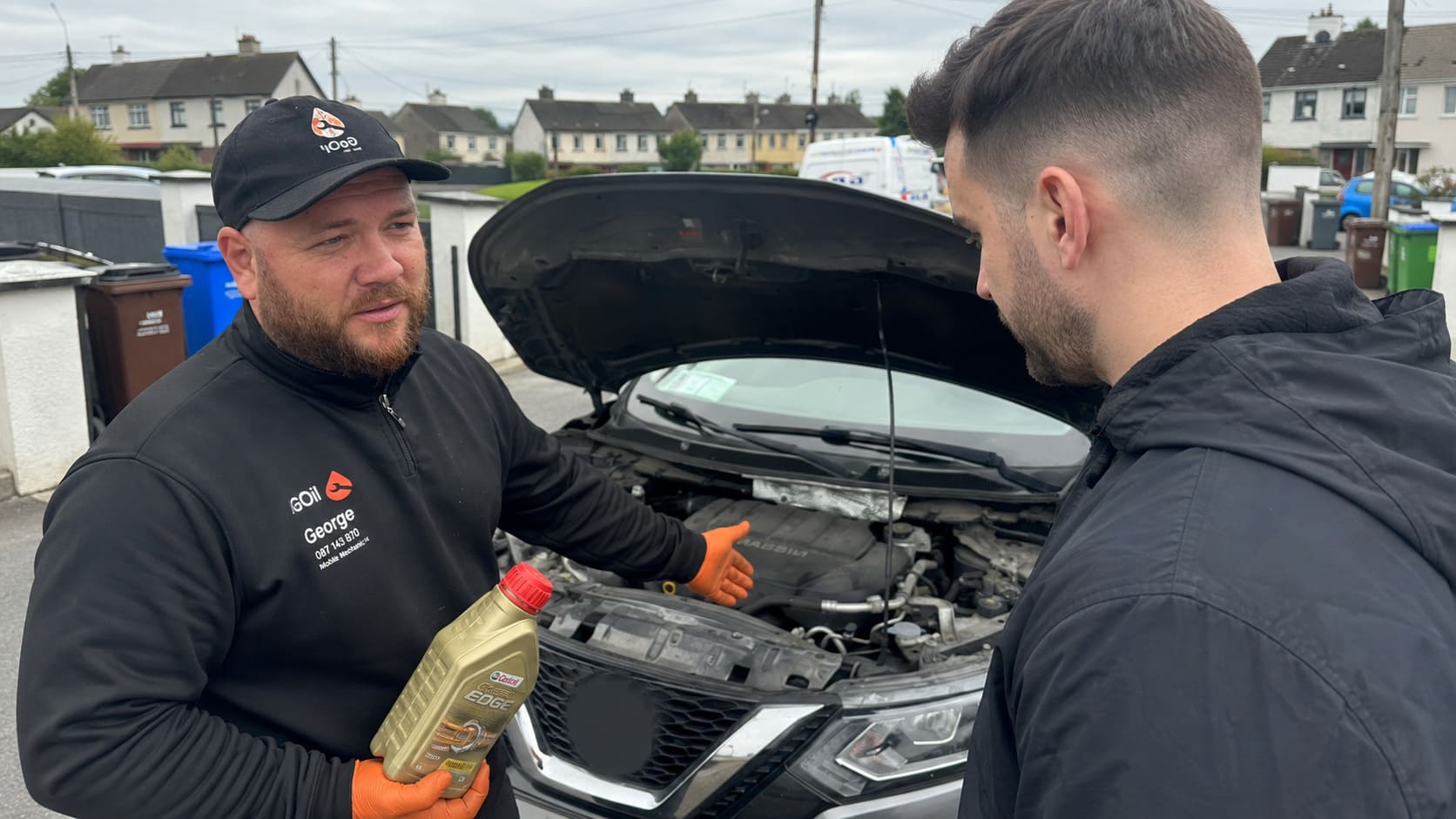
…but one car may genuinely need only oil and an oil filter, while another may be overdue for additional filters and a broader inspection.
The same car can also need a different level of servicing this year from what it needed last year.
That's why I don't like choosing a service simply by the name of the package.
The useful question is: what does this particular car actually need?
Your Car Needs a Service. But Do You Really Need a Garage?
The same car can also need a different level of servicing this year from what it needed last year.
That's why I don't like choosing a service simply by the name of the package.
The useful question is: what does this particular car actually need?
Your Car Needs a Service. But Do You Really Need a Garage?
Let's look at some real Limerick prices
This is where things get interesting.
I checked publicly advertised servicing prices in Limerick in August 2026. Here's what a driver can currently find online:
I checked publicly advertised servicing prices in Limerick in August 2026. Here's what a driver can currently find online:
Prices checked on 19 August 2026. They are shown only to illustrate why headline service prices are difficult to compare. Packages differ in scope, parts, inspections and service format, so this is not a like-for-like ranking. Always confirm the current price directly with the provider.
GoOil's current packages and inclusions are published on the service page. Sebastian's advertises its Full Service at €160 + VAT and explicitly says parts are not included. Modern Tyres currently advertises Interim from €195 and Full from €275 for smaller engines, with prices increasing according to engine size. AA Limerick publishes what its Interim and Full services include, while the vehicle-specific fixed price is provided through its booking process.
This isn't a league table.
Modern Tyres' €275 Full Service, for example, includes a much longer inspection list than GoOil's €185 Full package, so saying “GoOil is €90 cheaper for exactly the same thing” would be misleading. It isn't exactly the same thing.
But that is precisely the point of this article.
A €160 service and a €185 service are not automatically comparable just because both businesses use the word Full.
One may exclude parts. Another includes them.
One may include thirty-plus inspection items. Another may be deliberately simpler.
One requires you to take the car to a garage. Another comes to your house.
The headline number only becomes useful once you know what's behind it.
This isn't a league table.
Modern Tyres' €275 Full Service, for example, includes a much longer inspection list than GoOil's €185 Full package, so saying “GoOil is €90 cheaper for exactly the same thing” would be misleading. It isn't exactly the same thing.
But that is precisely the point of this article.
A €160 service and a €185 service are not automatically comparable just because both businesses use the word Full.
One may exclude parts. Another includes them.
One may include thirty-plus inspection items. Another may be deliberately simpler.
One requires you to take the car to a garage. Another comes to your house.
The headline number only becomes useful once you know what's behind it.
The oil can change the price before I've even touched the car
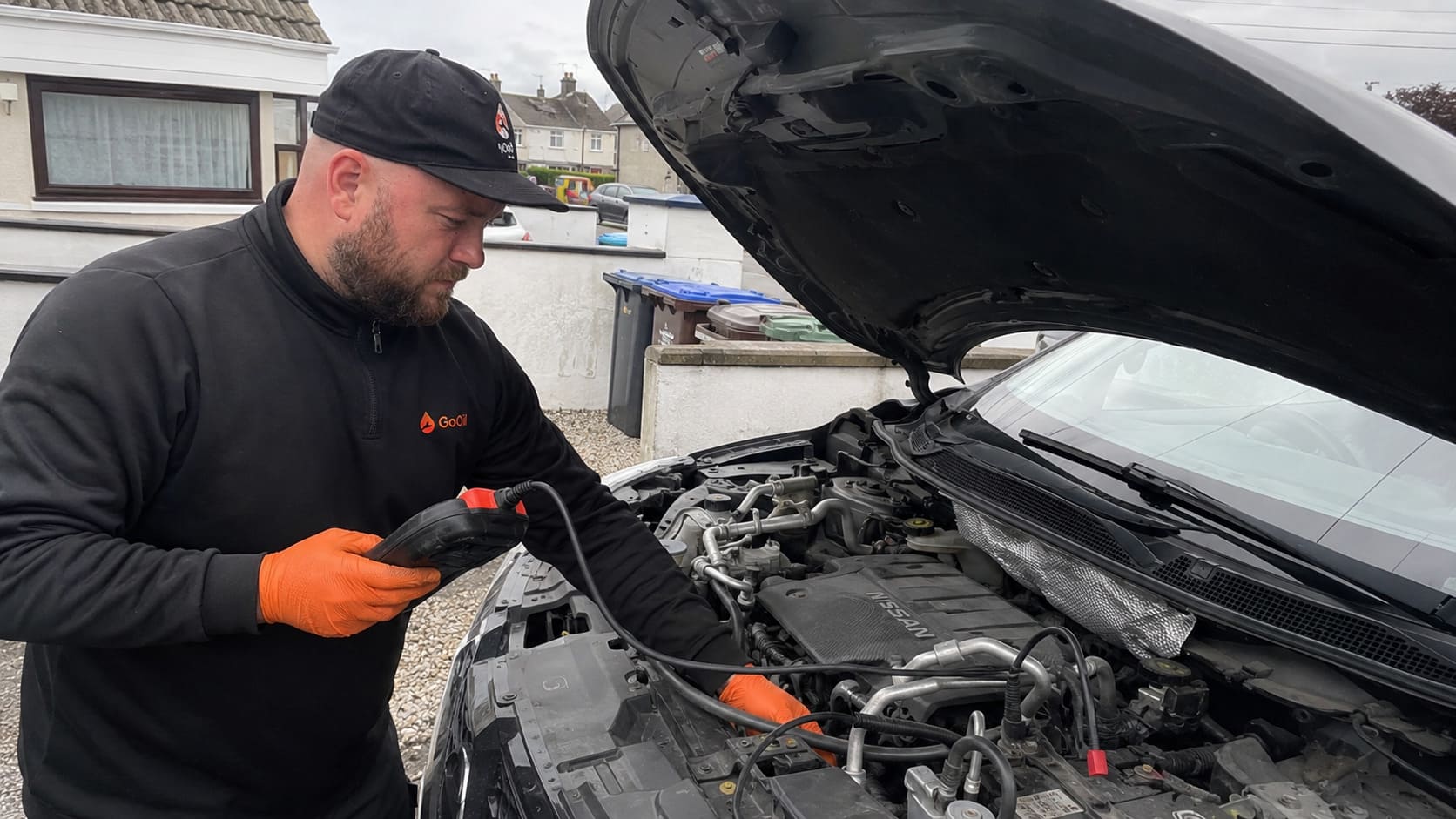
Oil sounds simple until you start selecting the correct one.
Most drivers recognise numbers such as 5W-30 or 0W-20. They're important, but they don't tell the whole story.
Manufacturers can also require a specific performance standard or approval. Ford, for example, instructs owners to check the required Ford oil specification alongside the viscosity rather than choosing by viscosity alone.
So two bottles can both say 5W-30 on the front and still not necessarily be the right choice for the same engine.
This affects price too.
One car may need around four litres of a relatively common oil. Another may require considerably more oil and a particular manufacturer-approved specification.
That's already a different materials bill before I have picked up a tool.
This is why, when I quote a customer, I don't simply think:
“It's an oil change. Oil is oil.”
I check what that engine actually requires.
Modern engines make this more important, not less. Some vehicles even use a wet timing-belt design in which the belt operates in engine oil; Ford confirms that the belt design itself varies by model, engine and year.
You don't need to become an oil engineer to service your car.
That's my job.
But there is one useful question you can ask a mechanic:
“Will the oil you're using meet the specification required for my engine?”
That tells you much more than simply asking whether it is 5W-30.
Can a Mobile Mechanic Really Do an Oil Change Properly?
Most drivers recognise numbers such as 5W-30 or 0W-20. They're important, but they don't tell the whole story.
Manufacturers can also require a specific performance standard or approval. Ford, for example, instructs owners to check the required Ford oil specification alongside the viscosity rather than choosing by viscosity alone.
So two bottles can both say 5W-30 on the front and still not necessarily be the right choice for the same engine.
This affects price too.
One car may need around four litres of a relatively common oil. Another may require considerably more oil and a particular manufacturer-approved specification.
That's already a different materials bill before I have picked up a tool.
This is why, when I quote a customer, I don't simply think:
“It's an oil change. Oil is oil.”
I check what that engine actually requires.
Modern engines make this more important, not less. Some vehicles even use a wet timing-belt design in which the belt operates in engine oil; Ford confirms that the belt design itself varies by model, engine and year.
You don't need to become an oil engineer to service your car.
That's my job.
But there is one useful question you can ask a mechanic:
“Will the oil you're using meet the specification required for my engine?”
That tells you much more than simply asking whether it is 5W-30.
Can a Mobile Mechanic Really Do an Oil Change Properly?
Parts matter — but “more parts” doesn't automatically mean “better service”
The same principle applies to filters.
The oil filter belongs with the oil change.
But what about the engine air filter?
Cabin filter?
Fuel filter?
Other scheduled items?
They don't all necessarily need replacing every time the oil is changed. Manufacturer schedules differ according to the vehicle and maintenance interval.
I don't think a good service should be based on:
“What else can I replace while I'm here?”
It should be based on:
“What is actually due on this car?”
If an air or cabin filter is due, replacing it makes sense. If it was changed recently and is still appropriate for continued use, changing it again simply to make the service list longer doesn't automatically make the car better maintained.
There can also be meaningful differences between the brands and specifications of service parts being used.
Again, this doesn't mean the most expensive part is automatically the best.
My approach is simpler: I want a part that is appropriate for the vehicle and that I'm comfortable fitting.
Saving a few euro by putting the cheapest thing available on someone's car isn't my definition of good value.
Neither is selling them something they don't need.
The oil filter belongs with the oil change.
But what about the engine air filter?
Cabin filter?
Fuel filter?
Other scheduled items?
They don't all necessarily need replacing every time the oil is changed. Manufacturer schedules differ according to the vehicle and maintenance interval.
I don't think a good service should be based on:
“What else can I replace while I'm here?”
It should be based on:
“What is actually due on this car?”
If an air or cabin filter is due, replacing it makes sense. If it was changed recently and is still appropriate for continued use, changing it again simply to make the service list longer doesn't automatically make the car better maintained.
There can also be meaningful differences between the brands and specifications of service parts being used.
Again, this doesn't mean the most expensive part is automatically the best.
My approach is simpler: I want a part that is appropriate for the vehicle and that I'm comfortable fitting.
Saving a few euro by putting the cheapest thing available on someone's car isn't my definition of good value.
Neither is selling them something they don't need.
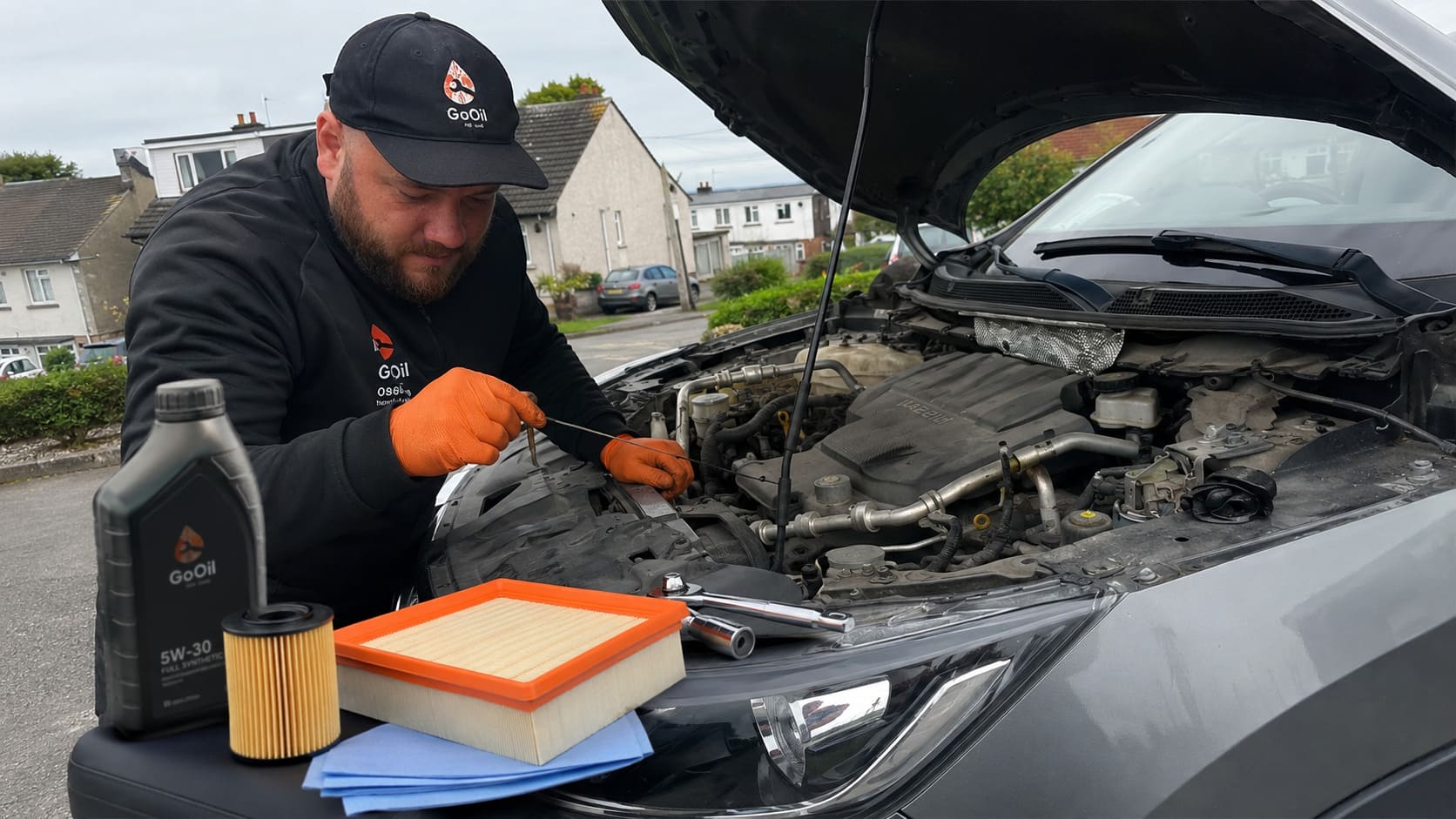
You're also paying someone to look at the car
An oil change can be exactly the right job.
But a broader service includes something that is easy to undervalue because you can't take it home in a box:
attention.
Someone is looking at the car rather than only replacing a fluid.
Depending on the service, that can include things such as tyre condition, brake-pad wear, fluid levels, battery health or obvious signs of leaks and deterioration.
The RSA makes an important point here: passing an NCT doesn't remove the owner's responsibility to keep the car roadworthy between tests. Regular attention to tyres, brakes and other safety-related items still matters.
For me, one of the most useful outcomes of a service is sometimes not: “This part needs replacing today.”
It's: “This is still fine now, but it's starting to wear. Let's keep an eye on it.”
That gives the owner time.
Time to plan the repair.
Time to budget.
And time to fix something before it becomes an emergency.
But a broader service includes something that is easy to undervalue because you can't take it home in a box:
attention.
Someone is looking at the car rather than only replacing a fluid.
Depending on the service, that can include things such as tyre condition, brake-pad wear, fluid levels, battery health or obvious signs of leaks and deterioration.
The RSA makes an important point here: passing an NCT doesn't remove the owner's responsibility to keep the car roadworthy between tests. Regular attention to tyres, brakes and other safety-related items still matters.
For me, one of the most useful outcomes of a service is sometimes not: “This part needs replacing today.”
It's: “This is still fine now, but it's starting to wear. Let's keep an eye on it.”
That gives the owner time.
Time to plan the repair.
Time to budget.
And time to fix something before it becomes an emergency.

A diagnostic scan is useful. It isn't a magic answer machine
This is another thing I think customers deserve to understand.
You connect a diagnostic scanner.
It produces a fault code.
Does that mean the scanner has told you exactly which part needs replacing?
No.
An OBD system stores diagnostic trouble codes when it detects conditions outside its expected parameters, but manufacturer diagnostic procedures regularly require additional testing to establish the actual cause. Ford's own technical procedures, for example, use DTCs as the starting point for further pinpoint diagnosis rather than treating every code as an automatic instruction to replace a part.
The way I explain it is:
A fault code is a clue, not a diagnosis.
Maybe the component named in the code really has failed.
Maybe the cause is elsewhere.
The expensive way to diagnose cars is to keep changing parts until the warning light disappears. Mechanics sometimes call that firing the parts cannon.
That's not what a diagnostic scan should be for.
If I find a code during a service, what I want to tell the customer is:
This is what the car is reporting. This is what it may mean. And this is what I would investigate next if further diagnosis is required.
Reading a code takes seconds.
Knowing what to do with the information is where the mechanic comes in.
You connect a diagnostic scanner.
It produces a fault code.
Does that mean the scanner has told you exactly which part needs replacing?
No.
An OBD system stores diagnostic trouble codes when it detects conditions outside its expected parameters, but manufacturer diagnostic procedures regularly require additional testing to establish the actual cause. Ford's own technical procedures, for example, use DTCs as the starting point for further pinpoint diagnosis rather than treating every code as an automatic instruction to replace a part.
The way I explain it is:
A fault code is a clue, not a diagnosis.
Maybe the component named in the code really has failed.
Maybe the cause is elsewhere.
The expensive way to diagnose cars is to keep changing parts until the warning light disappears. Mechanics sometimes call that firing the parts cannon.
That's not what a diagnostic scan should be for.
If I find a code during a service, what I want to tell the customer is:
This is what the car is reporting. This is what it may mean. And this is what I would investigate next if further diagnosis is required.
Reading a code takes seconds.
Knowing what to do with the information is where the mechanic comes in.
What a car service price usually doesn't include
This distinction is important.
A service might discover:
Finding the problem does not mean repairing it was included in the original service price.
The inspection may be part of your service.
The repair is separate work unless it was specifically included in what you agreed beforehand.
And it shouldn't simply appear on your bill as a surprise.
Ireland's Competition and Consumer Protection Commission advises drivers to obtain a clear quote that breaks down parts and labour and includes VAT. It also specifically recommends instructing the garage not to carry out extra work without your permission.
I think that's good advice.
If I find something while servicing your car, there are three things I want you to understand:
What did I find? How urgent is it? What will it cost if you want it repaired?
There is a huge difference between: “I wouldn't continue driving this car like this.”
and: “This is wearing. It's okay now, but you should plan for it later.”
A mechanic should be able to explain which conversation you're having.
A service might discover:
- worn brake pads
- brake discs that need attention
- a weak battery
- a leaking component
- damaged or badly worn tyres
- another mechanical or electrical fault
Finding the problem does not mean repairing it was included in the original service price.
The inspection may be part of your service.
The repair is separate work unless it was specifically included in what you agreed beforehand.
And it shouldn't simply appear on your bill as a surprise.
Ireland's Competition and Consumer Protection Commission advises drivers to obtain a clear quote that breaks down parts and labour and includes VAT. It also specifically recommends instructing the garage not to carry out extra work without your permission.
I think that's good advice.
If I find something while servicing your car, there are three things I want you to understand:
What did I find? How urgent is it? What will it cost if you want it repaired?
There is a huge difference between: “I wouldn't continue driving this car like this.”
and: “This is wearing. It's okay now, but you should plan for it later.”
A mechanic should be able to explain which conversation you're having.
Quote and estimate aren't the same thing either
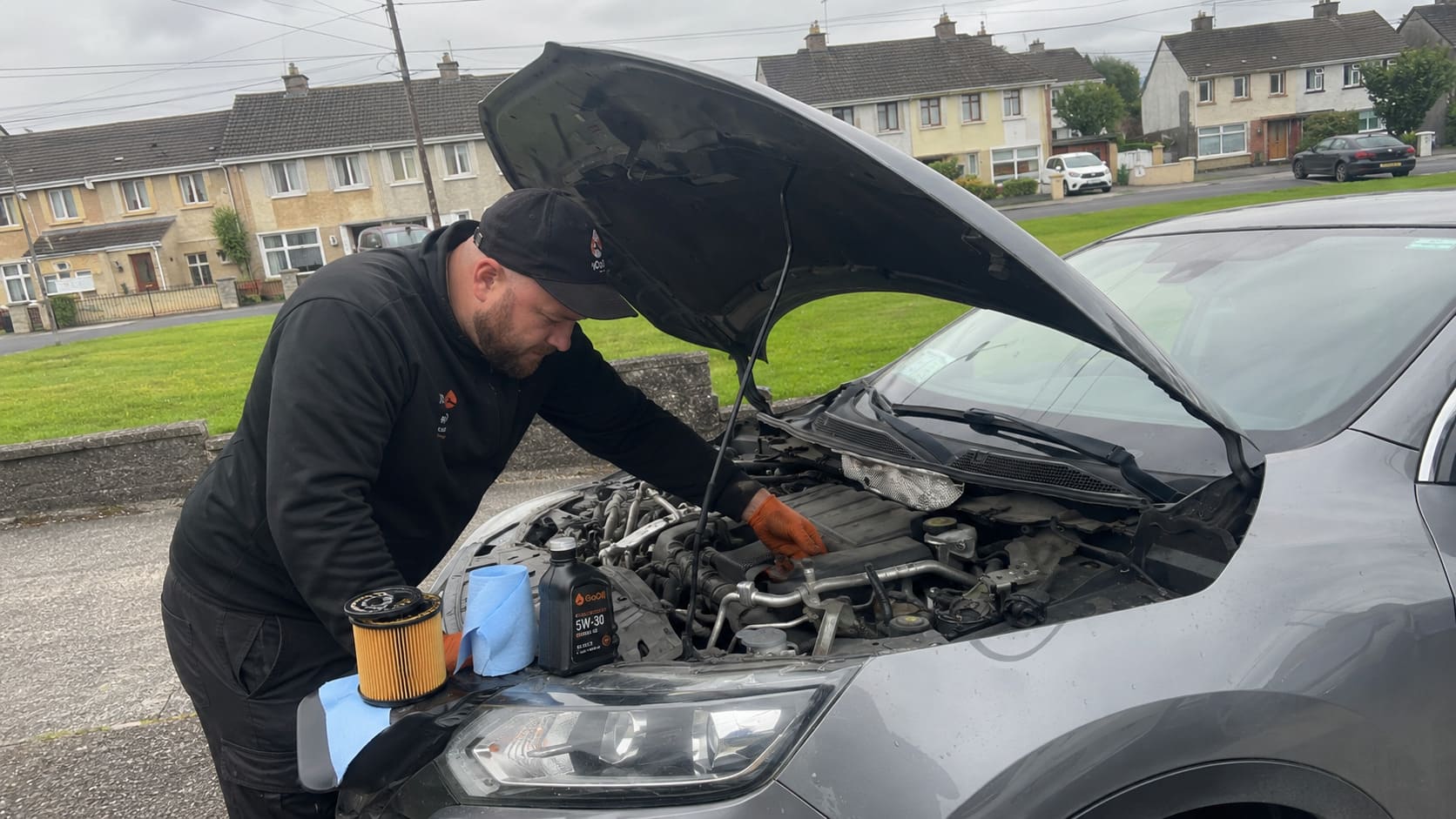
CCPC makes another useful distinction for Irish drivers.
A quote is a fixed price for the work agreed.
An estimate is an approximation and may change.
CCPC recommends getting a written quote where possible and keeping it for reference.
This sounds like a small detail until you are standing at a counter wondering why the bill is much higher than the number you heard on the phone.
It's another reason I like confirming the price before starting work.
If something changes because the car needs additional work, that should become a new conversation rather than a surprise at the end.
A quote is a fixed price for the work agreed.
An estimate is an approximation and may change.
CCPC recommends getting a written quote where possible and keeping it for reference.
This sounds like a small detail until you are standing at a counter wondering why the bill is much higher than the number you heard on the phone.
It's another reason I like confirming the price before starting work.
If something changes because the car needs additional work, that should become a new conversation rather than a surprise at the end.
This is what Limerick drivers actually worry about
Limerick drivers often aren't simply looking for the cheapest mechanic. In local Reddit discussions, people repeatedly ask for someone honest, fair and trustworthy — particularly when they don't know much about cars themselves. That tells you something important: price matters, but so does knowing what will be done, what it will cost, and whether you'll be asked before any additional work is carried out.
There are plenty of good garages and mechanics in Limerick. The interesting point isn't that drivers distrust garages in general — it's that trust and transparency are part of what people are looking for when they choose a mechanic.
That's also why certain comments appear again and again in GoOil reviews: customers mention knowing the price in advance, getting clear explanations and not being surprised by hidden costs.
Helen described the service as “transparent with costs and on time”. Vineesh specifically mentioned “no hidden costs”. Rossa wrote about knowing the price and agreeing to it before the service went ahead.
There's even a Limerick Reddit recommendation from somebody who says they use GoOil and that the service “does exactly what he says he will”, with the mechanic coming to their house and arriving on time.
Those comments matter to me more than someone simply writing:
“Car fixed. Five stars.”
Because transparency is exactly how I want the service to work.
There are plenty of good garages and mechanics in Limerick. The interesting point isn't that drivers distrust garages in general — it's that trust and transparency are part of what people are looking for when they choose a mechanic.
That's also why certain comments appear again and again in GoOil reviews: customers mention knowing the price in advance, getting clear explanations and not being surprised by hidden costs.
Helen described the service as “transparent with costs and on time”. Vineesh specifically mentioned “no hidden costs”. Rossa wrote about knowing the price and agreeing to it before the service went ahead.
There's even a Limerick Reddit recommendation from somebody who says they use GoOil and that the service “does exactly what he says he will”, with the mechanic coming to their house and arriving on time.
Those comments matter to me more than someone simply writing:
“Car fixed. Five stars.”
Because transparency is exactly how I want the service to work.
So what are you actually paying for?
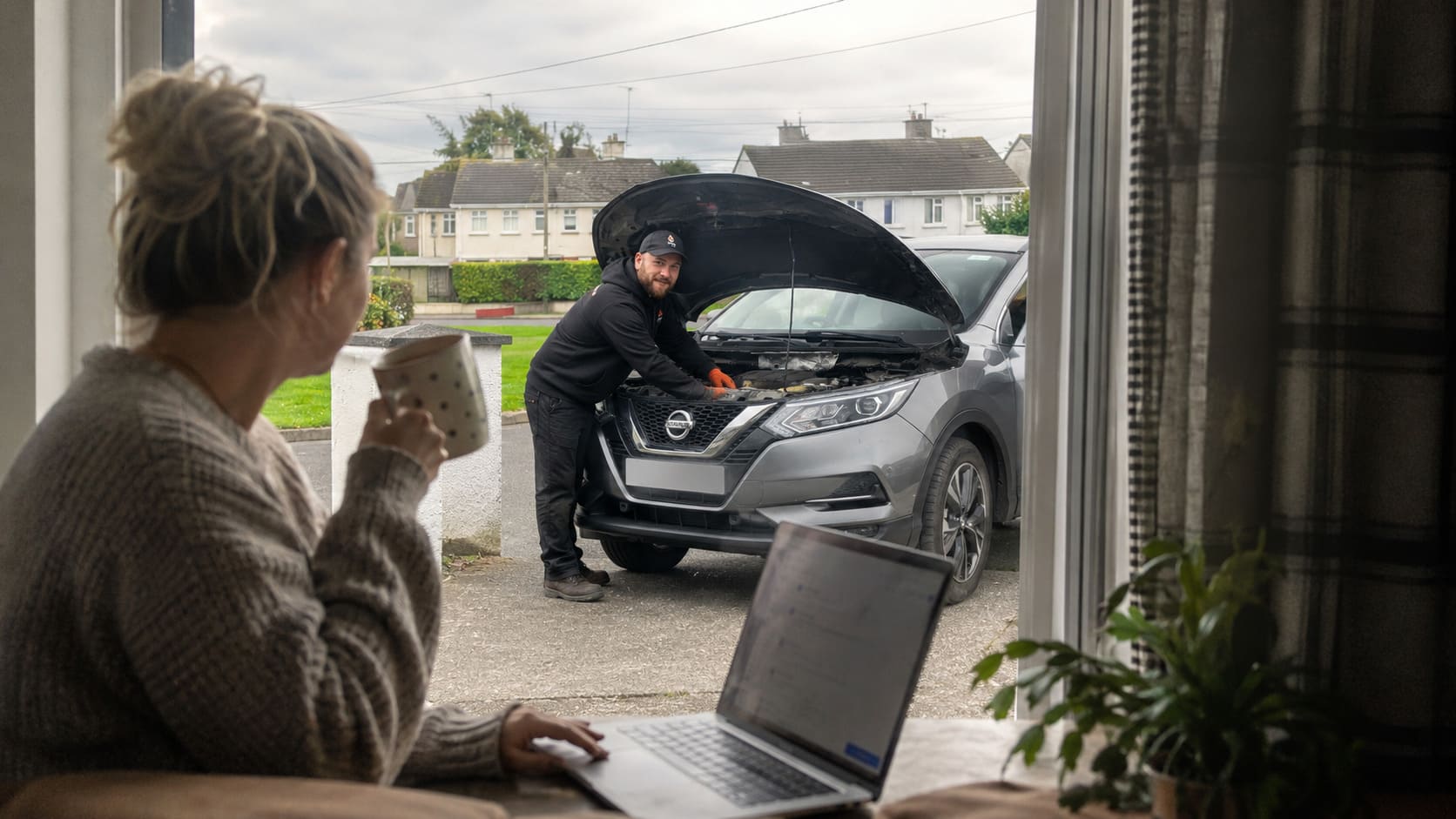
When I price a service, the invoice isn't just paying me to remove one filter and screw another one on.
You're paying for the correct oil specification and quantity.
You're paying for the parts included in that particular service.
You're paying for the time it takes to access and service that specific car properly.
You're paying for the tools and diagnostic equipment required to do the job.
You're paying for checks and inspection where they're included.
And you're paying for judgement: knowing what matters, what doesn't, what needs attention now and what can reasonably wait.
That's why comparing two services solely by price can be misleading.
But there is an equally important point.
You're paying for the correct oil specification and quantity.
You're paying for the parts included in that particular service.
You're paying for the time it takes to access and service that specific car properly.
You're paying for the tools and diagnostic equipment required to do the job.
You're paying for checks and inspection where they're included.
And you're paying for judgement: knowing what matters, what doesn't, what needs attention now and what can reasonably wait.
That's why comparing two services solely by price can be misleading.
But there is an equally important point.
More expensive doesn't automatically mean better
I don't want you to finish this article thinking:
“Fine. I'll always buy the biggest service.”
That's not the lesson either.
If your car has a clear maintenance history, was comprehensively serviced recently and is now simply due routine oil-and-filter maintenance, a smaller service may be exactly what it needs.
If you've just bought a used car and don't know its history, it has gone too long between services, or you want a broader idea of its condition, a larger service may make much more sense.
The manufacturer's schedule and the car's previous maintenance history should help guide that decision.
My rule is:
The best service isn't the biggest package. It's the service that makes sense for the car in front of me.
If I think Essential is enough, I'll say Essential.
If I think the car would benefit from Full or Premium, I should be able to explain why.
“Fine. I'll always buy the biggest service.”
That's not the lesson either.
If your car has a clear maintenance history, was comprehensively serviced recently and is now simply due routine oil-and-filter maintenance, a smaller service may be exactly what it needs.
If you've just bought a used car and don't know its history, it has gone too long between services, or you want a broader idea of its condition, a larger service may make much more sense.
The manufacturer's schedule and the car's previous maintenance history should help guide that decision.
My rule is:
The best service isn't the biggest package. It's the service that makes sense for the car in front of me.
If I think Essential is enough, I'll say Essential.
If I think the car would benefit from Full or Premium, I should be able to explain why.
How I structure servicing at GoOil
I use three packages because I want customers to be able to see what they're buying before I arrive. Current published prices are from €135 for Essential, €185 for Full and €225 for Premium, with all three carried out at the customer's location and the final vehicle-specific price confirmed before work starts.
Essential — from €135
This is mainly for routine oil-and-filter maintenance.
It includes engine oil and oil-filter replacement, service interval reset where applicable and an under-bonnet inspection.
If your car is maintained regularly and that's what is currently due, this may be all you need.
It includes engine oil and oil-filter replacement, service interval reset where applicable and an under-bonnet inspection.
If your car is maintained regularly and that's what is currently due, this may be all you need.
Full — from €185
This adds air-filter and cabin-filter replacement, a diagnostic scan and additional routine checks.
It makes more sense when the car has gone longer between services or those additional maintenance items are due.
It makes more sense when the car has gone longer between services or those additional maintenance items are due.
Premium — from €225
This adds tyre-pressure and tread checks, brake-pad condition, fluid-level checks, battery-health check and a fuller report after the service.
I often see the value here for higher-mileage cars, cars with less certain history or drivers who simply want a broader picture of what they're driving.
But again, the package name doesn't overrule the car.
If you're unsure, send me the registration and tell me what you know about its recent servicing.
That's a better place to start.
I often see the value here for higher-mileage cars, cars with less certain history or drivers who simply want a broader picture of what they're driving.
But again, the package name doesn't overrule the car.
If you're unsure, send me the registration and tell me what you know about its recent servicing.
That's a better place to start.
And then there's the cost that isn't on the garage invoice
There is one more thing you should include when comparing garage and mobile servicing.
Your time.
With a traditional garage you normally have to get the car there, hand over the keys and find your way home or to work. Then you need to get back again when it's ready.
Depending on the garage and the day, that can mean lifts, taxis, waiting around or reorganising work and family plans.
None of that appears in the service price.
With GoOil, the mechanic comes to the car instead. Routine servicing is carried out at your home or workplace across Limerick where the location is suitable.
For me, mobile servicing has another advantage that matters just as much:
you know who is actually working on your car.
There isn't a chain of customer → reception desk → workshop → reception desk.
If I find something, I can explain it.
If you want to see it, I can show you.
If I think something doesn't need replacing, I can tell you that too.
That's the kind of relationship with customers I wanted when I started GoOil.
Your time.
With a traditional garage you normally have to get the car there, hand over the keys and find your way home or to work. Then you need to get back again when it's ready.
Depending on the garage and the day, that can mean lifts, taxis, waiting around or reorganising work and family plans.
None of that appears in the service price.
With GoOil, the mechanic comes to the car instead. Routine servicing is carried out at your home or workplace across Limerick where the location is suitable.
For me, mobile servicing has another advantage that matters just as much:
you know who is actually working on your car.
There isn't a chain of customer → reception desk → workshop → reception desk.
If I find something, I can explain it.
If you want to see it, I can show you.
If I think something doesn't need replacing, I can tell you that too.
That's the kind of relationship with customers I wanted when I started GoOil.
Five questions I'd ask before booking any car service
You don't need to understand engines to make a sensible choice. Before booking, ask the mechanic:
Those questions will usually tell you more than asking:
“What's your cheapest Full Service?”
- What exactly is included in this service?
- Does that price include the oil, filters, labour and VAT?
- Will you use the oil specification required for my engine?
- Will you contact me before carrying out any additional work?
- When you're finished, will you tell me what you found and what may need attention next?
Those questions will usually tell you more than asking:
“What's your cheapest Full Service?”
Quick answers
What does a car service actually include?
There is no single universal answer. A basic service may centre on engine oil and the oil filter, while broader packages can include additional filters, diagnostics and checks of items such as tyres, brakes, fluids and battery condition. Check the actual list rather than relying only on the words Full Service.
Why can car-service prices in Limerick be so different?
Oil specification and quantity, parts, labour time and the scope of checks can all vary. Providers also structure prices differently: some advertised prices include parts, while others explicitly exclude them.
Is an oil change the same as a full car service?
Not necessarily. An oil-and-filter change may be exactly what your car currently requires, but a broader service can add filters, diagnostics and vehicle-condition checks.
Do I always need a Full or Premium service?
No. The right level depends on the vehicle, its mileage, manufacturer requirements and recent service history.
Does a diagnostic fault code tell you which part to replace?
Not necessarily. A DTC identifies a detected problem or condition and is often the starting point for further diagnosis rather than proof that one specific part needs replacing.
Can a mechanic do extra work without asking me?
CCPC advises Irish consumers to clearly instruct the garage not to carry out extra work without permission and to obtain a detailed quote before work begins.
How much does GoOil charge for a car service in Limerick?
Current published prices are Essential from €135, Full from €185 and Premium from €225. They are all-in starting prices for the published package, with the final vehicle-specific price confirmed before work starts.
Can a car service be done at my home or workplace?
Many routine service jobs can be completed at a suitable location outside a traditional workshop. GoOil provides fully mobile Essential, Full and Premium servicing at homes and workplaces across Limerick and nearby areas.
So, what are you really paying for?
When you service your car, you're not simply buying a number of litres of oil and an hour of someone's time.
You're paying for the correct materials, the work that is actually due, a proper look at the car and the judgement of the person doing the work.
That is why I wouldn't choose a mechanic simply because one headline price is €20 lower than another. But I wouldn't automatically choose the biggest and most expensive package either.
I'd ask what is included, what my particular car requires, and what happens if the mechanic discovers something else.
If those answers are clear, comparing prices becomes much easier.
The cheapest service isn't automatically the best value. Neither is the most expensive one. The right service is the one your particular car actually needs.
You're paying for the correct materials, the work that is actually due, a proper look at the car and the judgement of the person doing the work.
That is why I wouldn't choose a mechanic simply because one headline price is €20 lower than another. But I wouldn't automatically choose the biggest and most expensive package either.
I'd ask what is included, what my particular car requires, and what happens if the mechanic discovers something else.
If those answers are clear, comparing prices becomes much easier.
The cheapest service isn't automatically the best value. Neither is the most expensive one. The right service is the one your particular car actually needs.
A final word from me
I started GoOil because I wanted routine car servicing to be simpler, clearer and more convenient for people in Limerick.
For me, a good service isn't about selling the biggest package or replacing as many parts as possible. It's about understanding what the car actually needs, using the right parts and fluids, explaining what I find, and agreeing the price before any additional work is done.
If your car is due a service, send me the registration and, if you know it, a little information about its recent service history. I'll tell you which service makes sense for your car and confirm the price before the appointment.
For me, a good service isn't about selling the biggest package or replacing as many parts as possible. It's about understanding what the car actually needs, using the right parts and fluids, explaining what I find, and agreeing the price before any additional work is done.
If your car is due a service, send me the registration and, if you know it, a little information about its recent service history. I'll tell you which service makes sense for your car and confirm the price before the appointment.
— George
GoOil Mobile Mechanic, Limerick
GoOil Mobile Mechanic, Limerick